Trying to decide between Washington, DC and Northern Virginia? You are not alone. Many homebuyers in this region are weighing the same question: do you want the energy and convenience of city living, or the space and housing variety that comes with a more suburban setup? This guide breaks down the biggest differences in plain English so you can focus your search with more confidence. Let’s dive in.
DC vs Northern Virginia at a Glance
At a high level, Washington, DC tends to offer a denser, more urban housing market, while Northern Virginia leans more owner-occupied and suburban.
That pattern shows up clearly in the numbers. DC has an owner-occupied housing rate of 41.5%, while Alexandria is similar at 42.1%. Fairfax County rises to 68.6%, and McLean stands out at 86.1%, which points to a much stronger ownership-focused market.
Household size also helps tell the story. DC averages 1.99 persons per household, Alexandria 2.04, Fairfax County 2.75, and McLean 2.88. In simple terms, DC and Alexandria often fit a more compact urban lifestyle, while Fairfax County and McLean more often support buyers looking for more space.
Home Prices Across the Region
If price is a major factor, it helps to compare these areas directionally rather than assume they are direct equivalents.
Recent median sale price snapshots show Washington, DC at $590,000, Alexandria at $645,000, and Fairfax County at $750,000. McLean is in a different pricing tier, with a Census estimate for median owner-occupied home value of $1,412,700.
These figures are not measured the exact same way, so they should be read as general signals, not one-to-one comparisons. Even so, they make one thing clear: buyers usually find the highest price points in McLean, while DC, Alexandria, and Fairfax each offer a different mix of housing type, location, and budget.
Housing Types Feel Very Different
DC housing is denser
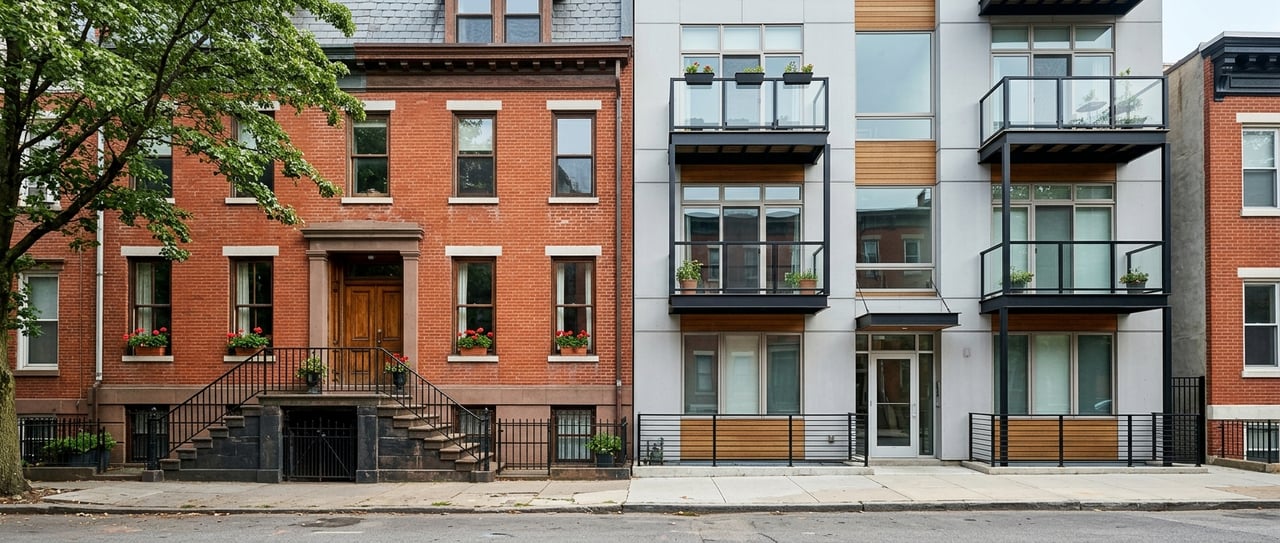
The District has a much denser housing stock than Northern Virginia. According to the DC Office of Planning, about 30% of the city’s housing stock is single-family, and in Wards 1, 2, and 6 more than half of homes are in large apartment buildings with 20 or more units.
That helps explain why many DC neighborhoods feel more walkable, transit-oriented, and focused on condos or rowhouses. If you picture a lifestyle with less reliance on a car and more proximity to daily conveniences, DC often fits that goal.
Fairfax County offers more detached homes
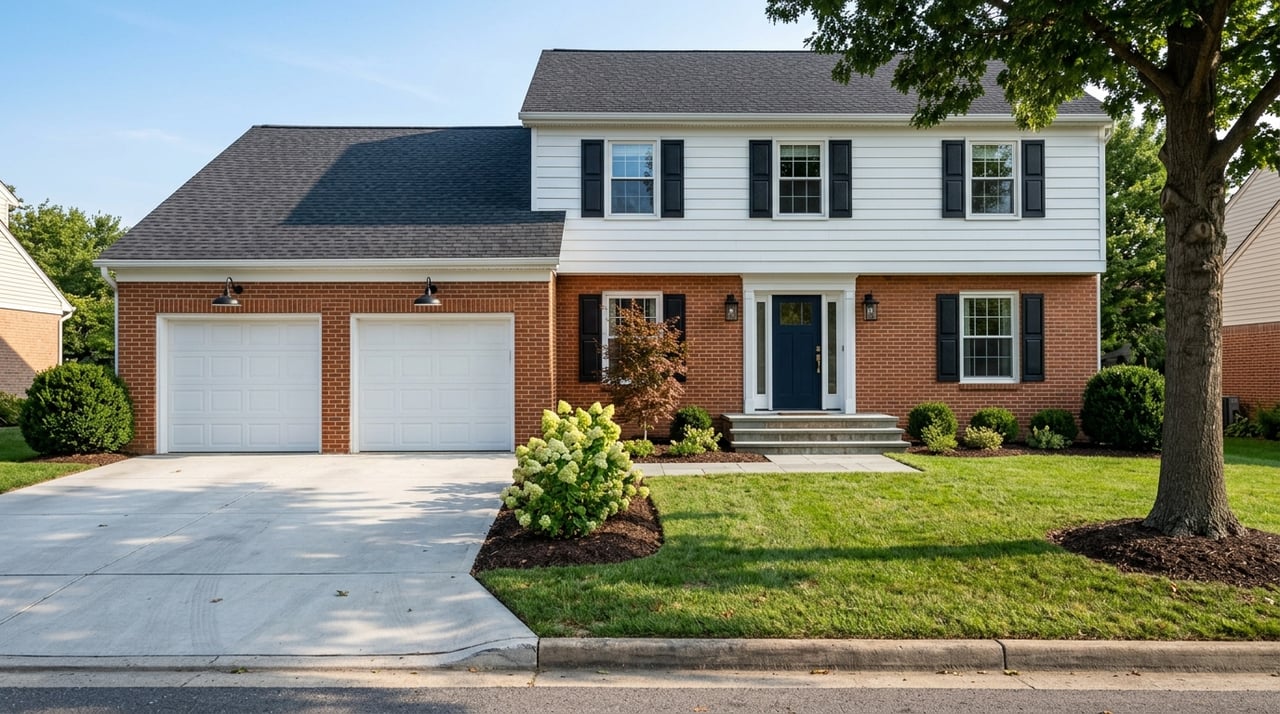
Fairfax County’s 2024 housing inventory shows a more suburban mix: 45.1% single-family detached homes, 24.0% townhouses, and 30.8% multifamily units.
For buyers, that usually means a wider selection of detached homes, townhome communities, garages, and larger lots than you will typically find in the District. If your must-have list includes extra bedrooms, storage, outdoor space, or a more traditional subdivision layout, Fairfax County often gives you more options.
Alexandria sits in the middle
Alexandria is a true middle ground between DC and Fairfax County. The city includes detached homes, two-family dwellings, townhouses, rowhouses, and multifamily buildings.
Its 2025 assessment data also shows the spread in housing choices. The average assessed value was $1,001,336 for single-family homes and $447,612 for condominiums. That range helps buyers choose between a more urban condo lifestyle and a more traditional homeownership setup without leaving the city.
McLean is more single-family oriented
McLean is the most detached-home-focused market in this comparison. In ZIP code 22101, Fairfax County reports 9,290 single-family units, 1,037 townhouses, and just 506 units in buildings with 9 or more stories.
Combined with its 86.1% owner-occupied rate, McLean reads as a high-end, ownership-heavy market. If you are looking for a premium Northern Virginia address with a strong single-family orientation, McLean often lands on the shortlist.
Property Taxes and Ongoing Costs
Property taxes are part of the monthly math, and this is one area where DC can look attractive at first glance.
DC’s residential property tax rate is $0.85 per $100 of assessed value. Eligible owner-occupants may also qualify for the District’s homestead deduction, currently $739.93 per year. Fairfax County’s base real estate tax rate for tax year 2026 is $1.12 per $100, and Alexandria’s FY 2026 real estate tax rate is $1.135 per $100.
On base tax rate alone, DC is lower than Fairfax County and Alexandria. But that does not automatically mean your total cost of ownership will be lower, because assessed values, housing type, and the amount of space you are buying all affect the bottom line.
Commute and Transit Options
DC supports transit-first living
If commuting style matters as much as commute time, DC has a clear advantage for buyers who want transit close at hand. WMATA says more than 54% of the region’s jobs are within a half-mile of a Metro station or bus stop.
Average commute times are fairly close across the board: 30.0 minutes in DC, 28.4 in Alexandria, 28.9 in Fairfax County, and 28.1 in McLean. The bigger difference is often how you get to work, not how long the trip takes.
Northern Virginia offers more mixed commute patterns
Northern Virginia buyers often have more than one commute option, but many still rely on a combination of car, feeder bus, park-and-ride, or rail.
VRE serves commuters traveling from Northern Virginia suburbs into Alexandria, Crystal City, and downtown Washington along the I-66 and I-95 corridors. McLean also has Metrorail access through the McLean station and service from Fairfax Connector routes 703, 721, 722, 724, and 480.
Alexandria has strong transit access
Alexandria stands out within Northern Virginia for buyers who want an urban-suburban balance. The city has five Metro stations, which supports easier rail access than many suburban areas.
If you want to stay in Virginia but still prioritize rail access and a more connected street grid, Alexandria often offers a practical middle path.
School Setup Works Differently
For many buyers, one of the most important differences is not just housing. It is how school assignment works.
In DC, My School DC serves as the common application and lottery for DCPS and public charter schools from PK3 through grade 12. Families can also attend their in-boundary DCPS school without using the lottery.
In Fairfax County, school assignment is boundary-based, and the county approved boundary changes in January 2026 for the 2026-27 school year. Alexandria City Public Schools also uses attendance zones, with new boundaries taking effect for the 2026-27 school year.
In broad terms, DC is more choice-driven, while Fairfax County and Alexandria are more residence-based. If school process matters in your move, this is one of the most important differences to understand early.
Which Area Fits Your Priorities?
Choose DC for urban access
DC may be the better fit if your top priorities are walkability, transit access, condo or rowhouse living, and school lottery options.
That does not mean every DC neighborhood feels the same, but the city’s housing stock and transit network generally support a more urban day-to-day experience.
Choose Alexandria for balance
Alexandria often works well if you want a blend of urban convenience and Virginia-based homeownership options. It offers a broader range of housing forms than many suburban markets, plus strong Metro access and a zoned school structure.
For many buyers, that combination makes Alexandria feel like a practical compromise between city living and suburban routine.
Choose Fairfax County for more suburban inventory
Fairfax County may make the most sense if you want a larger pool of detached homes and townhouses, more owner-occupied communities, and a more traditional suburban housing mix.
It is often a strong match for buyers relocating to Northern Virginia who want more square footage, more storage, or more outdoor space than they expect to find in DC.
Choose McLean for a higher-end suburban market
McLean is best viewed as a premium submarket. It is especially worth considering if you have a larger budget and want a detached home-oriented area close to Tysons and Metro access.
Because pricing is significantly higher than the other areas in this comparison, it tends to appeal to buyers who want top-tier space, ownership stability, and a more exclusive single-family market.
Final Takeaway for Buyers
The choice between DC and Northern Virginia usually comes down to lifestyle as much as budget. DC often offers more density, transit access, and condo or rowhouse living. Northern Virginia, especially Fairfax County and McLean, more often offers space, detached homes, and a more ownership-focused market.
If you are relocating or simply trying to narrow your search, it helps to start with your non-negotiables: commute style, housing type, school structure, and monthly carrying costs. Once those are clear, the right geography usually becomes much easier to spot.
If you want help comparing neighborhoods, housing options, and day-to-day tradeoffs across DC and Northern Virginia, Meghan M Wasinger can help you build a search strategy that fits your goals.
FAQs
How do Washington, DC and Fairfax County differ for homebuyers?
- Washington, DC generally offers a denser housing market with more condos and rowhouses, while Fairfax County offers more detached homes, townhouses, and a more suburban ownership-focused profile.
How do property taxes compare in DC and Northern Virginia?
- DC’s residential property tax rate is $0.85 per $100 of assessed value, compared with $1.12 in Fairfax County and $1.135 in Alexandria, though your actual costs depend on assessed value and housing type.
How does Alexandria compare with DC for buyers who want transit access?
- Alexandria offers strong transit access with five Metro stations, making it a middle-ground option for buyers who want Virginia housing choices with easier rail access.
How does McLean compare with DC and Alexandria for housing type?
- McLean is much more single-family oriented and owner-occupied, with a higher-priced market and far fewer multifamily options than DC or Alexandria.
How do school assignment systems differ in DC, Fairfax County, and Alexandria?
- DC uses a mix of in-boundary school access and the My School DC lottery, while Fairfax County and Alexandria primarily use residence-based attendance zones.
What should relocating buyers compare first between DC and Northern Virginia?
- Start with commute style, preferred housing type, school setup, and total monthly ownership costs, because those factors usually make the best-fit location much clearer.