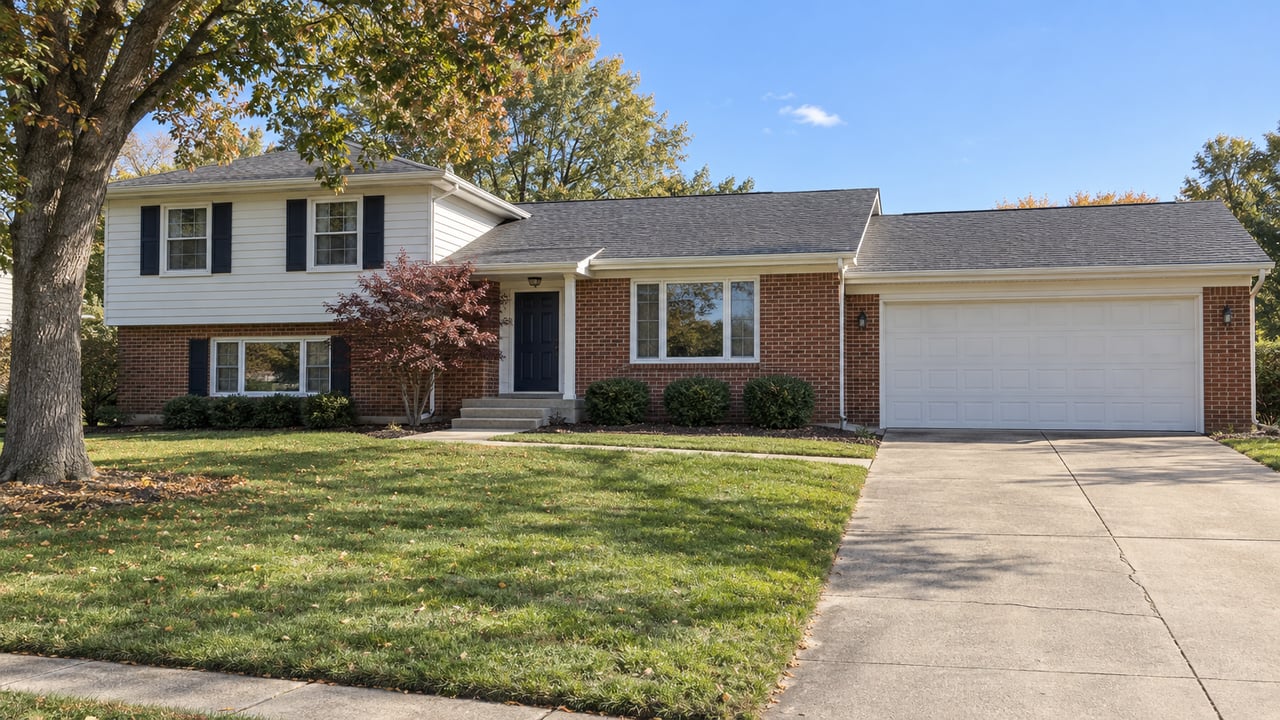
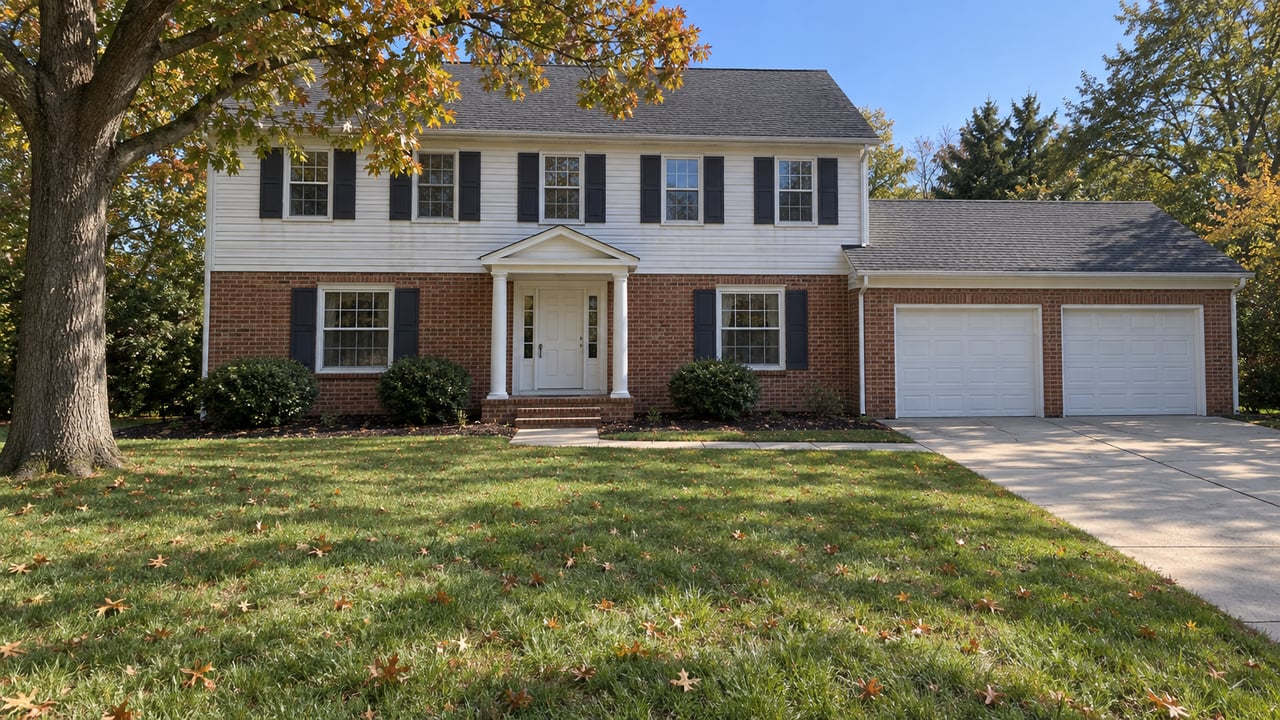
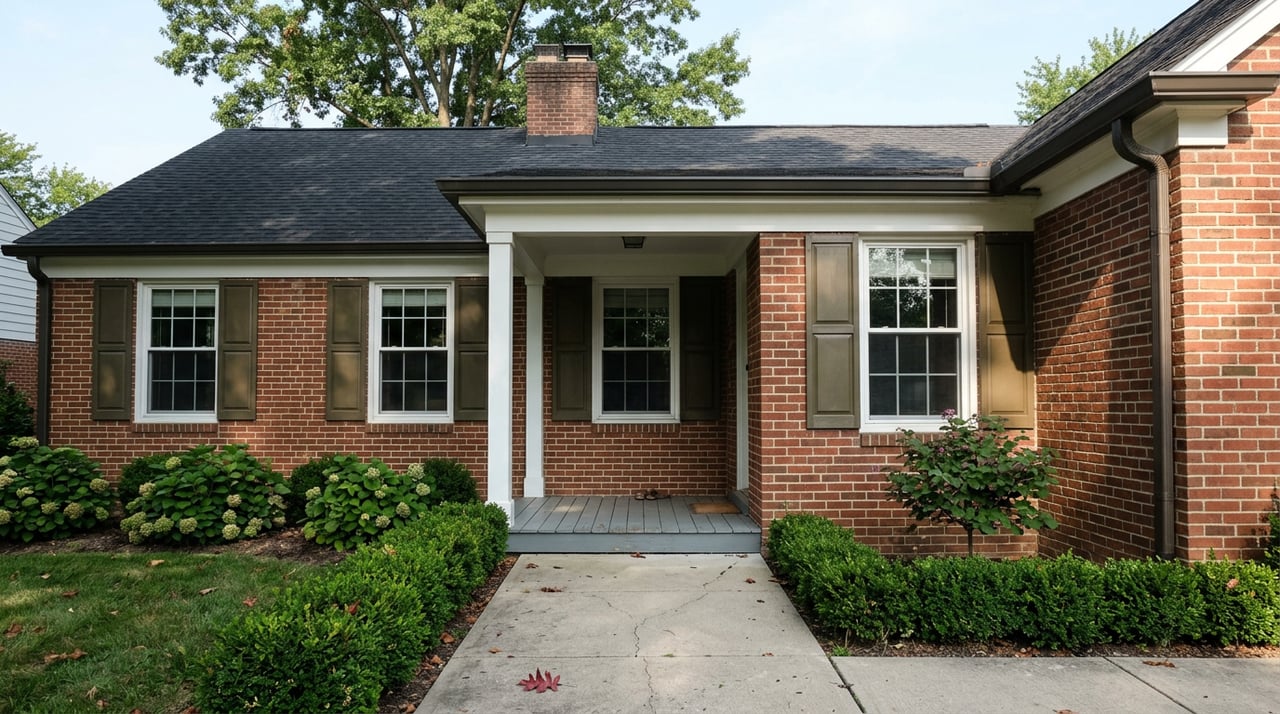
A seller in Chesterbrook lists a 1962 rambler. Within a week, the winning offer comes in all cash, no financing contingency, no home inspection contingency, and a closing date driven entirely by the buyer's construction schedule. The buyer never asks about the roof, the kitchen, or the HVAC system. That's because none of it matters. The buyer is a builder, and the house is coming down.
This isn't a rare event in McLean. It's a distinct category of transaction happening alongside the ordinary resale market, and it explains a pattern that confuses a lot of sellers before they list: the median price for their zip code doesn't describe one market. It describes two, stitched together into a single number that hides more than it reveals.
Why the Portals Don't Agree
Pull McLean's numbers from two different sources this year and you already get two different stories. As of July 31, 2026, Zillow put the average home value at $1,472,788, with homes moving to pending in around 16 days. Redfin's closed-sale data for the three months ending May 2026 told a different story: a median sale price of $1.9 million, up 9.7 percent year over year, with a median 19 days on market.
The usual explanation is that each source measures something different: one models a typical value across the full range of homes, the other tracks what actually closed. That's true, but it's not the whole answer. The gap is also a symptom of a market where a meaningful share of what's transacting isn't a home sale in the conventional sense. It's a land sale that happens to have a structure sitting on it, priced and marketed on a completely different logic than a move-in-ready colonial three doors down.
You can see the scale of that logic playing out right now on Lewinsville Road, where a roughly 25-acre estate that sat untouched for decades is being subdivided into 24 homesites ranging from 0.82 to 1.2 acres each. Three builders, Artisan Builders, Galileo Signature, and Winthrop Builders, are working the site. Reporting from late 2025 had the first phase of road infrastructure on track to finish by the end of that year, with the second phase following in early 2026. That project is the visible, large-scale version of something happening lot by lot across older McLean neighborhoods: land getting valued and sold independently of whatever house happens to occupy it.
What "Highest and Best Use" Does to a Sale
When a residential appraiser evaluates a typical resale, the question is straightforward: what have comparable homes with comparable finishes sold for recently. When land value exceeds structure value, the question changes entirely. The appraisal has to establish the highest and best use of the parcel, meaning the most valuable, legally permitted way that land could be developed. That's a different appraisal exercise, and it's part of why so many of these deals close in cash. A conventional lender wants a comp-based appraisal that supports a loan against an existing structure. A builder isn't borrowing against the house. He's paying for dirt, and he already knows what he's going to do with it.
That's the mechanical reason cash dominates this segment. It also means a seller who assumes their inspection contingency and appraisal contingency protect them the way they would in a normal sale is working from the wrong playbook. Those protections exist to manage risk around the condition of a structure. When the buyer doesn't care about the structure, they're negotiating away contingencies that would matter enormously in a different kind of transaction, and a seller needs to understand why before assuming a clean, contingency-free offer is simply a sign of a strong deal.
The Permits That Replace the Inspection
The due diligence doesn't disappear. It moves. Instead of a home inspector flagging a bad water heater, the real gating process runs through Fairfax County's land development rules, and it applies whether the transaction closes in cash or not. Before a builder can demolish and rebuild on a McLean lot, several things have to check out:
- Land disturbance permits. Fairfax County requires a permit for any land-disturbing activity, including tree removal, on more than 2,500 square feet of a property. On a typical suburban lot, that threshold is easy to hit.
- Resource Protection Area review. If a parcel touches an RPA, established under the Chesapeake Bay Preservation Act, removal of trees or vegetation is prohibited without prior approval from Fairfax County Land Development Services.
- Tree conservation requirements. The county's Tree Conservation Ordinance (Chapter 122 of the county code) governs how much canopy has to be preserved or replanted as part of any development plan, and mature trees with large root zones can shrink the usable building envelope on a lot more than a buyer expects going in.
- Asbestos inspection. According to McLean Demolition, Virginia requires a certified asbestos inspection before demolition of any structure built before 1980, which covers a large share of McLean's original housing stock. Asbestos-containing materials were standard in flooring, pipe insulation, and ceiling finishes through the 1970s.
- Utility disconnection sign-off. Each provider works on its own scheduling timeline. That coordination phase alone commonly runs three to five weeks.
These issues shape how fast a builder can actually move once the deal is done, and a seller who understands that timeline going in is in a much better position to set realistic expectations with a buyer, or to recognize when a buyer's aggressive closing date doesn't line up with what the county's process actually allows.
When the Renovate-or-Rebuild Math Actually Applies
Not every older home in McLean is a teardown candidate, and treating every 1960s house that way overstates the opportunity. The rule of thumb used by builders working this market is that a rebuild starts to make more financial sense than a renovation once expected renovation costs approach 70 percent or more of the home's replacement value. Below that threshold, a well-planned renovation or addition can still be the better play, both for an owner staying put and for a seller trying to decide whether to invest in updates before listing.
Where the math tips toward rebuild tends to be concentrated in specific pockets: neighborhoods like Langley Forest, Salona Village, McLean Hamlet, Broyhill McLean Estates, and parts of Chesterbrook and Old Dominion Gardens, where original homes date to the 1940s through 1970s and sit on lots generous enough to support a new build in the 5,000 to 11,000-plus square foot range. Even here, buildability isn't automatic. A lot can be zoned correctly and still run into floodplain restrictions, RPA limits, or minimum yard requirements that shrink what can actually go up. Anyone treating a McLean teardown purely as a real estate decision, without treating it as a site-specific land-use question first, is skipping a step that can change the entire value of the deal.
What This Means If You're Listing an Older Home
If your home falls into this category, the conversation before listing looks different than a standard pre-sale consultation. It's worth knowing, before you set a price, whether your lot size and zoning district put you in land-value territory, whether any part of your property touches a Resource Protection Area, and roughly what comparable lots, not comparable houses, have traded for recently. It's also worth setting expectations that your buyer pool may skew heavily toward cash and builders rather than traditional owner-occupants, which changes how you should think about staging, timeline, and what repairs are actually worth making before you list.
A Few Questions Worth Asking
Do I still need a home inspection if my buyer is a builder? Many builder-buyers will decline one anyway since the condition of the house doesn't affect their plans. If you want documentation of the property's condition for your own protection, a pre-listing inspection is worth considering regardless of who ends up buying.
How long does the demolition process take after closing? It varies by property, but permit coordination, including the asbestos inspection and utility disconnection sign-offs, commonly takes three to five weeks before mechanical demolition can begin. That's separate from and in addition to whatever closing timeline you negotiate.
Is my home automatically a teardown candidate if it's older? Age alone doesn't determine it. Lot size, zoning, proximity to RPAs or floodplain areas, and whether renovation costs would approach that 70 percent replacement-value threshold all factor in. A house built in 1965 on a constrained or environmentally sensitive lot may not pencil out as a teardown at all.
If you're weighing whether your McLean property sits in land-value territory or traditional resale territory, that's exactly the kind of question worth getting a straight answer to before you set a price. Meghan Wasinger and the team at Wasinger & Co can walk through your specific lot, zoning, and comps and help you figure out which market you're actually selling into. Get Your Free Home Valuation to start that conversation.
This article is general information, not legal, tax or financial advice. Consult a qualified professional about your situation.