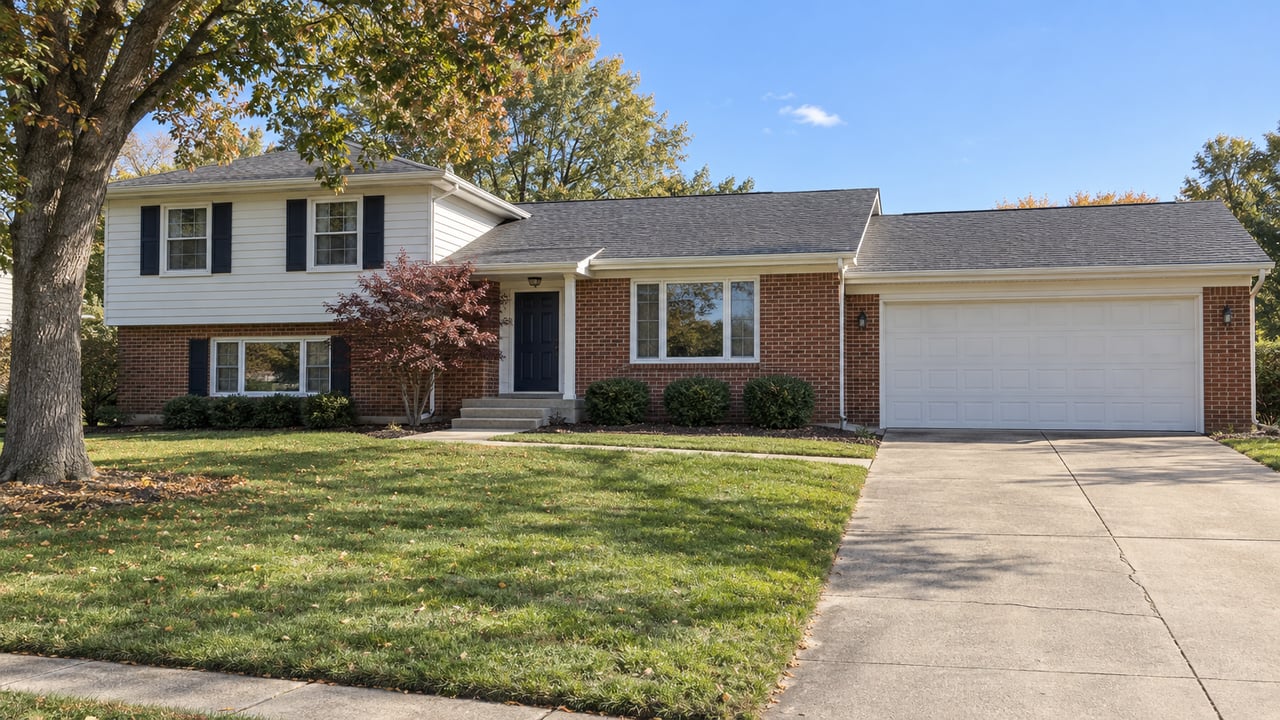
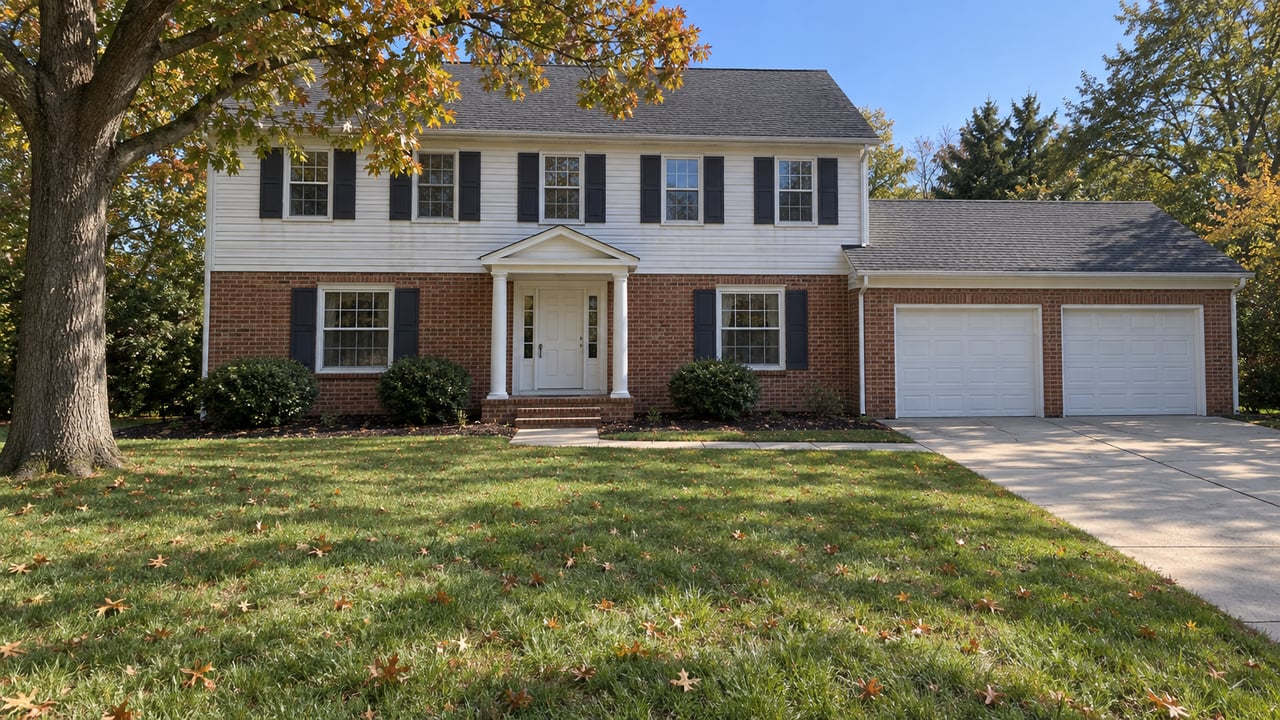
Two colonials a block apart on the same 22181 mailing address can carry different property tax bills, different trash pickup days, and a different government to call if you want to build a fence. Nothing on the listing sheet tells you which one you're looking at. The dividing line isn't the school boundary or the HOA. It's whether the parcel sits inside the incorporated Town of Vienna or in the unincorporated Fairfax County land around it, some of which gets marketed as Vienna and some as Oakton, none of which has its own government at all outside the town limits.
That distinction rarely comes up in a buyer's first pass through listings, because "Vienna, VA" reads like one market with one median price. It isn't. It's two tax jurisdictions and a patchwork of postal addresses that don't line up with either one.
The Town Line Isn't Where the Neighborhood Name Changes
Vienna's mailing addresses cover three zip codes: 22180, 22181, and 22182. Only 22180 sits mostly inside the actual incorporated town. The other two spread across the boundary, meaning a portion of the homes with a Vienna zip code are inside the Town of Vienna and subject to its town government, while the rest are unincorporated Fairfax County parcels that simply share the same mail carrier. Oakton, immediately adjacent, is a census-designated place with its own zip code, 22124, that also spills into 22181. It has no town council, no town police department, and no mayor. Neither does the unincorporated part of "Vienna." Both are run directly by the Fairfax County Board of Supervisors.
So the practical split isn't Vienna versus Oakton. It's incorporated versus unincorporated, and the mailing address won't tell you which side of that line a specific parcel falls on. That's a detail worth confirming before you write an offer, not after settlement, because it changes what you pay every year and who you call when something breaks.
What the County Charges Everyone
Every property in Fairfax County, whether it's in the Town of Vienna, unincorporated Oakton, or anywhere else in the county, pays the same base real estate tax rate. For the current tax year, that rate is $1.1225 per $100 of assessed value. It's actually a quarter-cent lower than the prior year's $1.125, after the Board of Supervisors rejected County Executive Bryan Hill's proposal to raise it to $1.14 and instead offset the gap with a new 4 percent meals tax on restaurant food and drink that took effect this past January. Fairfax County assesses property at 100 percent of fair market value each year, which means the rate applies close to what your home would actually sell for, not some discounted assessment ratio.
That county rate is the floor. Every homeowner in the Vienna-Oakton area pays it. What changes is what gets added on top.
The Town Adds Its Own Line, and It Just Moved
If a parcel sits inside the incorporated Town of Vienna, the owner pays the county rate plus a separate town real estate tax, set independently by the Vienna Town Council. That add-on rate held flat at 19.5 cents per $100 for more than a decade, through multiple budget cycles where officials chose to let rising assessments generate more revenue rather than raise the rate itself.
That changed this year. The Town Council adopted its FY27 budget on May 19, 2026, and it took effect July 1, cutting the town rate by half a cent. Councilmember Jessica Ramakis pushed for the reduction. FFXnow quoted her on how far it actually goes:
"Going to 19 cents, it would be great progress for us. It is not a reduction in the tax bill for residents."
Her longer-term target is 18.6 cents, the rate she's said would be the point where assessment growth stops translating into higher bills. The council didn't get there this cycle, but the half-cent cut is the first real rate movement Vienna homeowners have seen in years, and it's worth knowing about if you're comparing a listing inside town limits against one just outside it.
That extra rate isn't just a fee. It funds a separate layer of government: an elected mayor and six-member town council, a town police department, and public works crews who run curbside trash and recycling, brush and bulk collection, leaf pickup, and snow plowing for every residence inside town limits. Outside that boundary, in unincorporated Oakton or unincorporated "Vienna," those same services either don't exist in the same form or are handled through county contracts and private haulers, and zoning questions go to the county rather than a town council you can watch vote on Monday nights.
Here's what that gap looks like in real dollars. Zillow put the average Vienna-area home value around $1.19 million as of June 2026. Scale both rates to that figure and the town add-on alone runs about $2,260 a year on top of roughly $13,360 in county tax, versus just the county amount for a comparable home outside the line. That's real money, and it's the kind of number a buyer should see before falling in love with a specific street, not after the first tax bill arrives.
Why the Median Price Depends on Which Portal You Check
The same boundary confusion shows up in how differently the major portals report prices for Oakton. Zillow's home-value index puts a typical Oakton home around $1.10 million. Redfin, pulling from actual closed sales, reported a median sale price of $793,000 in March 2026 across 34 transactions. That's not a typo and it's not one source being wrong. Zillow's figure is a model estimating value across the entire housing stock. Redfin's is the literal median of whatever closed that particular month, and with only 34 sales, a handful of smaller homes or townhomes closing can pull the median down hard without changing what any individual house is actually worth.
Vienna shows a version of the same split. Zillow's average home value sat at $1,192,173 in June 2026, down slightly year over year. Redfin, looking at closed sales over the three months ending in May 2026, reported a median of $1.6 million, up double digits from the year before. Different methodologies, different time windows, different slices of inventory, and two very different headline numbers for what's supposedly the same market.
None of that is a reason to distrust either portal. It's a reason not to treat any single median as a stand-in for what a specific house, on a specific side of a specific line, is worth or costs to own.
Checking Which Side of the Line a Property Sits On
Before you get attached to a home in the Vienna-Oakton area, it's worth confirming two things: the assessed value, and whether the parcel is inside the Town of Vienna. Fairfax County's real estate tax rate page lists the current county rate and any special district charges, and the county's MyFairfax portal shows a property's specific tax district. The Town of Vienna also publishes its own real estate tax calculator so you can see the current town rate applied to a specific assessed value. If you're comparing two listings and one says "Vienna" and the other says "Oakton," that label alone won't tell you which government sets the rules. The parcel's jurisdiction will.
A Few Questions Worth Asking Before You Offer
Does living in Oakton mean I avoid the town tax entirely? Yes, because Oakton has no incorporated town government of its own. But so does most of unincorporated Fairfax County carrying a Vienna mailing address. The tax difference tracks the town boundary, not the neighborhood name on the listing.
If a home is inside the Town of Vienna, do I get anything for the extra tax? Town-run trash, recycling, brush and bulk collection, leaf pickup, snow plowing, and a town police department, all funded by the add-on rate and none of it billed separately.
Is the town rate going to keep dropping? The council cut it by half a cent for FY27, landing near 19 cents, but at least one councilmember has said that's still not enough to offset rising assessments and has pushed for a lower target rate in future budgets. Rate decisions happen annually and are worth checking each spring before a purchase closes.
Where do I find out which side of the line a specific address falls on? Fairfax County's property search tools and the Town of Vienna's own tax calculator will both show it, and either office can confirm it directly if the online records are unclear.
If you're weighing a move into Vienna or Oakton and want to know exactly what a specific address will actually cost you to own, not just what the portal says the neighborhood is worth, Meghan Wasinger and the team at Wasinger & Co can pull the parcel-level numbers before you write an offer. Reach out for a free home valuation and a straight answer on which government you'd actually be signing up for.
This article is general information, not legal, tax or financial advice. Consult a qualified professional about your situation.